





Form of Medication
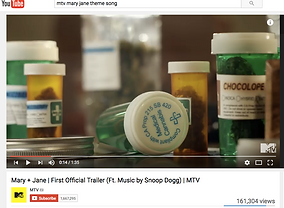
Let’s discuss the portrayal of Marijuana and its consumption as a form of medication, to further elaborate on the perspectives introduced by the TV shows Weeds and Mary + Jane. In Mary + Jane, marijuana as a form of medication is portrayed in many small ways. For instinct, in episode one Paige refers to herself and Jordan as “drug dealers” and Jordon corrects her by saying “ we are a legal prescription delivery service.” Through this the shows tells its audience subliminally that marijuana is a form of medication because it most be prescribed by a doctor. Also Jordan and Paige package their product in vials or prescription medicine bottles to delivery it to their customers which also subliminally tells its audience that marijuana is a form of medication. Furthermore the Paige and Jordon often say in the show (episode 1, 2,4 and more) that they only delivery to people who have a medical prescription licenses, which means they only sell to people who’s doctors have approve that they can purchase it for their illnesses. In the final episode of Mary + Jane Paige and Jordon delivery weed to an old woman who proclaims “You girls are saving my life with your marijuana… before it I couldn’t do the things I loved, like painting and having sex because of the pain I was in from my arthritis.” This shows how the TV is trying to convey to its audience that marijuana is a form of medication for diseases such as arteritis. On top of that during the introduction of the show there was a close up of a vial and it was labeled medical marijuana. Likewise in the TV show Weeds, marijuana is seen as a form of medication. In season one episode three the main character Nancy Botwin, opens a medical marijuana dispenser where she sells marijuana to people who are legally allowed to purchase it. The portrayal of marijuana on TV in this way along with the fact that marijuana is capable of healing the pain and side effect of certain medical issues is leading to it being viewed as medicine on universal scale in America. For example Bottorff et al. (2013) doctors who specializes in health education and promotion, assert in there article that the patients in their experiment used marijuana for a plethora of medical purposes (p.1). In concordance scientists who possess a PhD in the Health sciences and Psychology Ogborne et al., state some of the medical issues treated using marijuana; HIV-AIDS-related problems, chronic pain, depression, anxiety, menstrual cramps, migraine, narcotic addiction as well as everyday aches, pains, stresses and sleeping difficulties (p.435). Also, epilepsy is also one of the commonly known diseases that are well treated using the cannabidiol (CBD) in marijuana. The previously stated issues aren’t the only medical issues that can be treated using Marijuana which promote people to view it as medication. For example, doctors specializing in multiple sclerosis, Page & Verlhoef (2006) declare that marijuana can relieve the symptoms that accompany multiple sclerosis that prescription medication doesn’t and the patients prefer it to their prescription medication (p.65). This is becoming increasingly frequent; more patients of chronic diseases are turning towards the use of marijuana as a form of medication as opposed to their government approved medication. This isn’t only because marijuana is easier to acquire but because it helps this people with their illness far better than the government issued medications. The aforementioned reason along with the way marijuana is portrayed in TV shows such as Weeds and Mary + Jane are the reasons marijuana is becoming increasingly popular in American societies.
Scientists are becoming more aware that marijuana contains medical properties but simultaneously it still isn’t acceptable in society or by the government. Marijuana is seen in the same light as 19th century drugs such as, poppy and foxglove. Lavoie (2011) asserts that marijuana as a form of medication is becoming increasingly more acceptable (p.915). I believe that the reason it wasn’t previously accepted was because an adequate amount of information wasn’t known on the effects of marijuana on health and cognitive function. Fear is more often times than not developed when something is unknown to people. All throughout history fear of the unknown has provoked people into doing some rather unwarranted things. Marijuana hasn’t been an acceptation to this, although people have been consuming it since the seventeenth century. Now that scientists have begun studying marijuana more in depth the fears people poses about it are reducing substantially. An example of these studies includes Segail et al.’s experiment in the article “Long-term effects of marijuana use on the brain”. Segail et al. are neuroscientists who studied at the IV leagues. Their study implied that marijuana is able to provoke synapse that stop connecting or never initial connect to begin to connect (p.16916). That being the case they are beginning to perceive it as medication, because any substance that has the capabilities to do something like that possess’ medicinal qualities. Now that people have more information on marijuana and what it is capable of they aren’t as afraid of it any longer, and without this fear there is room for different perspectives on the drug to arise. This is where TV shows such as Mary + Jane and Weeds come in, providing their audiences with perspectives such as marijuana as a form of medication.
As I previously mentioned, because marijuana is better suited for getting rid of more symptoms of illnesses that the government-issued medications people have began turning towards it as form of medication. For example in Snelders, a publicized author in Social History of medicine’s book review of the book, Dying to get high: marijuana as medicine the main characters grow marijuana in their garden to use as a form of medication for the wife’s seizures. But before it can be seen as a form of meditation it needs to go under regulatory studies and be approved as having a favorable balance of harms and benefits. Then it can be made into a pharmaceutical product, because smoking has never been a conventional way to get an exact dose of medication consistently. Doctors are also beginning to perceive marijuana as a form of medication, but more importantly they are trying to discover a new way to control the dosage of marijuana. With the combination of the many benefits that marijuana possess’ that is now being discovered and the portrayal of marijuana in American TV shows as a form of medication the perspective of marijuana as medication is becoming more widespread.
Promotes Counter-hegemony
In addition to the portrayal of Marijuana as a form of medication, TV shows such as Weeds and Mary + Jane use their shows to promote counter-hegemony or a way to break out of the system the government as constructed. When we are born into this world most people are taught that there is a right and wrong way to live your life. There are culture, governmental, and social rules in place for people to follow from the beginning that gets people to become unaccepting of things that question or threaten the structure of those rules. In the TV show Weeds the introduction for the show is a montage of a typical suburban community but the people, houses, cars and activities they were doing are all the exact same. This portrays to the audiences that people in society are all the same and living in the same manner because the government has constructed for us how things should be done and we think that this is the only way to live life. But in the TV show when everyone is “the same” Nancy Botwin is different because she sells marijuana, which isn’t only different but unacceptable. The show uses Nancy Botwin selling marijuana in a community were selling marijuana isn’t acceptable to tell its audience that, Nancy isn’t a bad person who she is trying to hurt herself or anyone and marijuana is a form of medication so why isn’t she allowed to sell it because there is law that selling marijuana is illegal. Putting this thought in the minds of the audience plants the seed of counter-hegemony. It has also been indicated by marijuana smokers that its consumption can provoke one to push the boundaries of their mind and thoughts therefore creating people who think, act and do things more differently that how the government says people should. This idea is supported by Segail et al. (2006) and their affirmation that marijuana can make synapses that stop connecting or never connected begin to connect (16915). It suggests that marijuana consumption alters some parts of the brain. And if it is true, than that can become problematic for a government who’s entire system depends on people doing what they say, this threaten their authority. In order to keep their ‘power’ the government punishes anyone who does anything that threatens their powers. I think marijuana’s ability to make people question the government is why the government claims that it’s not good for ones health. Other people claim that the government punishes use for using marijuana because it is dangerous to our health. The symptoms accompanied with the consuming of marijuana such as sluggishness, decreased motivation and depression are why the government says marijuana is bad for one’s health. This has convinced people not to consume it. But if people weren’t convinced by it, there would be a great awaking of the masses that will completely put the authority of government into question causing counter-hegemony. That is how this postmodern marijuana revival and counter-hegemony portrayed in TV shows such as Weeds and Mary + Jane began.
The show Weeds has been apart of the postmodern cultural marijuana revival, as well as counter-hegemony. Lavoie (2011), a specialist on counter-hegemony in societies states that the TV show Weeds promotes counter-hegemony and acceptance of many things including marijuana consumers (p.913). In the show, things that aren’t usually accepted in society are accepted. For example in many other shows such as South Park being a Jew is made fun off but in Weeds Nancy’s children being Jews, because there deceased father was Jew, aren’t mad fun of. Also in the show the residents are all more or less the same, live in the same shaped and sized houses do the same things; go to college, get a job, get married and have babies. These things are what the government has led them to believe is the ‘right’ way to live life. But Nancy Botwin and her family live life in a way that completely goes against these rules and so they are judged by society, their friends and are also left with fear of persecution from the government. The same thing are also happening in the TV show Mary + Jane. Similar to Weeds things that wouldn’t be accepted are accepted in Mary + Jane, for example in episode two the girls stand in a ginormous line to get into a restaurant were they sell juice in a "sippy" cup, this isn’t only accepted but is one of the most popular things to do. Also in episode nine Paige and Jordon’s new gay neighbors try to embarrass them at the party at their house once they found out that they sell marijuana. They say that they’re business isn’t an actual job and that they’re lowlifes for choosing that lifestyle. But Paige stand up for herself and Jordan by saying “there isn’t one certain way to live life and selling marijuana doesn’t make us any less of a good person then any other person here.”
Aside from these shows there are many more examples of people who are punished by the government because they choose to medicate differently. In Page and Verlhoef’s experiment, they discover that the patients are not afraid to us what is considered an unconventional medication (2006, p.65). Though the patients are aware that the government doesn’t allow people to consume marijuana because it is consider illegal they do anyways. I think they choose to consume it anyways because they are not afraid of getting punished by the law for using medication that benefits and helps them manage their illness. Another examples of people who are punished by the government because they choose to do things differently is the couple in Chapkins and Webb’s book “Dying to get high; marijuana as medicine”. In this book the couple was arrested for possessing marijuana though they used it for medical purposes and they were legally allow to do so because they have a medical marijuana license. But because society feels so strongly about everyone has to live their lives in this ‘box’ that the government has constructed, the couple was arrested for daring to go against it. The couple was used as an example by the government to prevent people from making the same choices they did. They than went on to create an organization called Wo/Men’s Alliance for Medical Marijuana (WAMM) after that incident to break out of the system constructed by the government. They are still continuously harassed by law enforcement because they continue to live their lives outside the ‘rules’. Because so many TV show such as Weeds and Mary + Jane are using their shows to promote people breaking out of system the governments has constructed using marijuana, many more people are using marijuana to medicate despite fear of punishment. People are using it recreational, medicinal and more over turning to selling it as a full-time job just to send a message to society that they won’t live there lives constricted.
Cool or Used to Have Fun
Although marijuana has medicinal properties and is used it to promote counter-hegemony, another perspective that TV show’s such as Weeds and Mary + Jane establishes is that marijuana consumption is cool or used to have a fun time. In the show Weeds Dough Wilson a friend of Nancy Botwin is an excessive marijuana user and many of the other characters see him as a fun person. They hang out with him when they want to have fun. For example in season one episode five when Doug shows up at Nancy’s door and Andy opens the door to tell him that Nancy isn’t there, Doug asks Andy if he can come in and watch porn with him, Andy says no but when Doug hints that he has marijuana on him Andy invites him in almost instantly. In season one episode seven Nancy Botwin hires a college student, Sanja, to distribute marijuana and he goes from being shy and unpopular to popular almost instantly afterwards, he walks taller and talk to more people at his school, people considered him cool and fun. Later on a couple episodes later Nancy realizes that Sanja is high and asks him when he began smoking marijuana and he responded by saying when he started selling and that it’s the best thing to ever happen to him, it stands to reason that he became more popular when he started smoking and selling marijuana. Even though people haven’t been known to overdose on marijuana, consuming too much of it can lead to dizziness and vomiting. Even with these side effects Mundrae White (2015), a healthcare provider states that marijuana is the most commonly used illicit drug, with an estimated 14.6 million active users (p.338). With such alarming figures, one must wonder what motivates the indulgence even with its alarming ‘side effects’. American TV shows are portraying marijuana as something cool universally. In the TV shows people of all color, ethnicity, race, sex and financial background smoke marijuana and the other characters in the shows think that the people who smoke are fun to have around. That portrayal of marijuana is becoming more prominent in the American society, for example at Virginia Commonwealth University four out of five people that I’ve meant since my college career either regularly smoke, smoke occasionally or have at least smoked once in their lifetime. I think that the reason marijuana has become so wide spread is the combination of TV shows portraying marijuana smoking as something cool people do. Also most, if not all influential celebrities smoke marijuana, also portraying to their fans, which are a mix of people from seniors to young adults, that smoking marijuana makes a person cool. In season two episode eight Celia Hoots says to a group of students at the drug free conference at Shane, Nancy’s sons school that “Marijuana is like penguins, it marches from the ghettos to the suburbs,” but as depicted by the show Weeds and Mary + Jane marijuana is something everyone does or should do because it makes you cool.
The ‘bad effects’ of marijuana consumption are the reason why it has be suggested that people should show caution when consuming marijuana. Segail et al. (2014) conducted a study that resulted in their finding that marijuana users have a greater functional connectivity in OFC network (p.16916). The study suggests that consumption of marijuana gives benefits that disappear if one doesn’t continues to consume the drug constantly and can also make one depressed therefore making it addictive. If the body gets used to the dose of dopamine that smoking provides, the body begins craving the dopamine. Their study however, cannot address whether the structural alterations observed are permanent or reversible. Conjointly Hall and Degenhardt, national drug and alcohol researchers claim the most the probable adverse effects include; a dependence syndrome, increased risk of motor vehicle crashes, impaired respiratory function, cardiovascular disease, and adverse effects of regular use on adolescent psychosocial development and mental health (2009, pp.1384). These adverse effects can range from mild to extreme. Therefore people need to exercise causation when consuming marijuana because as of now, it is absolutely certain that too much of it can lead to any one or more of these effects. Furthermore Simon and Carey (1998) also claim there is a correlation between marijuana consumption before college and an increase smoking habit in college. This in combination with both Segail et al. and Hall & Degenhardt’s claim that the adverse effects of marijuana consumption include an addiction to the drug explains the non-declining significant number of marijuana smokers previously mentioned.
Marijuana and its smoking is also considered a way of having fun. In Weeds there are uncountable instances where Doug, Andy, Silas, Shane and Celia’s daughter smoke marijuana as a way to have fun. In season one episode eight, Silas, Nancy’s oldest son, and his deaf girlfriend smoke marijuana for fun while hanging out in his room after school. In season one episode nine Andy tells Nancy marijuana makes you hungry and happy, suggesting that smoking marijuana will make you happy and when you’re happy you’re having fun therefore marijuana allows you to have a fun time. In Mary + Jane Paige and Jordon smoke frequently to have fun and relax from stressful situations. Additionally in episode two Paige delivers marijuana to a man at his house who proclaims “I’ve had a really stressful day, I really need it today,” this shows how people use marijuana to unwind and have fun. In the final episode of Mary + Jane there is a final song and while everyone is dancing and having fun and laughing they are also smoking marijuana. This ultimately is the portrayal of marijuana smoking as a way to have fun. In the show they depict to their audience that consuming marijuana can allow you to have extraordinary experiences such as being able to speak to your private parts. Thought marijuana consumption is portrayed as a way to have fun doctors wants their patients to use precaution when using this drug recreationally because the regular consumption of it is accompanied by adverse side effects such as problems with cognition, balance, and fatigue and the feeling of being high. Having fun is something people what to do frequently but because of this adverse affects cause by frequent marijuana use, frequent marijuana consumers are urged to show causing.
As I previously established marijuana is the most commonly used illicit drug although most people know that marijuana can be harmful. Marijuana and most drugs are easily available on college campuses because students see it as a way of having fun. For example people I associated with who are marijuana smokers claim that they us the drug to have fun because the effects it provides relaxes them. Because more students are viewing marijuana as something fun as previously mentioned, marijuana use is rising among students. Therefore the harmful effects of marijuana and other drugs are taught to students in an attempt to prevent them from being tempted to try it. The harmful effects of marijuana are taught to the students in high school so that they are educated on the drug in case they are introduced to it later on in life. But every since programs such as D.A.R.E. that warn kids on the dangers of drugs were introduced to schools, marijuana consumption has risen (Donaldson, 2016). Also Simon and Carey (1998) discovered that consuming marijuana before college can predict whether someone will develop a smoking habit later on in life (p.730). I think that marijuana is becoming increasingly popular, especially in colleges, because people are being introduced to it at a younger age because schools are inertly prompt kids to want to smoke marijuana by telling them not to. These kids develop an addiction to smoking marijuana therefore becoming daily smokers adding to the growing number of marijuana smokers.
Marijuana Distribution as a Well-Paying Career Path
The last prospective that TV shows such as Weeds and Mary + Jane portray to its audience is marijuana distribution as a form of career that pays handsomely. In both Weeds and Mary + Jane the story line is correlated with the main characters selling marijuana as a means to make easy, fast, and large amounts of money. The TV show depicts all sorts of people selling marijuana, from an suburban mother of two in Weeds to two women in their mid twenties own live in Los Angeles in Mary + Jane. These are two examples out of many others. These shows make it look like selling marijuana is the most easiest way to make money and that it also comes with added bonuses of also being able to get high whenever you feel like it for free. In the shows, the down sides of selling marijuana are shown but not as prominently as the upsides. For example in Mary + Jane, the police arrested Paige once in the show and she was in jail for a short amount of time than release to go about her business. I think that this gives the audience a false idea of how it would really be like if they sold marijuana in the real world. It doesn’t depict the real life severe consequences of selling marijuana which range anywhere from months in jail to years in prison. This also occurs in Weeds; in the entire eight-season show law informant never catches Nancy Botwin once. Except when the college campus police in season one episode nine catches her. Even the college campus police didn’t punish Nancy, he didn’t arrest her or put her in jail, he just took her marijuana. The show gives its audience a falsified idea of what it would be like to actual sell marijuana in the real world. For example at the seasons beginning Nancy meets a DEA agent who ends up protecting her from getting caught by the government until he dies. And then Nancy goes on to meet a Mexican drug dealer/ senator in the later seasons who also protects her from getting in trouble with the law. The probability that someone who seals marijuana in the real world would continuously meet people who have the power to protect him or her from the law is little to none existent. Lastly in season one episode nine Andy tells Nancy “weed makes you hungry, and happy, and in your case, financially solvent.” This communicates to their audiences that marijuana selling solves financial issues, which subconscious tells their audience to sell marijuana if they want to be wealthy.
These TV shows portray marijuana selling as a consistent source of income and furthermore that the stream of income will be grand. In Weeds Nancy Botwin’s marijuana selling business makes her enough money to pay mortgage on the mini mansion she lives and take care of her family. After those things, in season two episodes eight she has enough money left over that she is able to go on a shopping spree. In episode 10 of Mary + Jane, Paige and Jordan claim that they quit there jobs and liquidated all their assets in order to be able to start their marijuana distribution services. In the show Jordan and Paige are making enough money to be able to pay rent and maintain their non-money cautious lifestyle without a job. They frequently buy over-expensive food. This makes the shows audiences think that if they quit their jobs and invest their time in selling marijuana they will make boatloads of money. In the real world everyone is turning to selling marijuana because they perceive it as an easy way to make money. But no matter how high the demand for marijuana is, if everyone is selling it they won’t be able to make the money TV shows have led them to expect to make, because you can only make that much money from selling marijuana if there aren’t that many people doing it. For example if two people are sharing four apples they get more than if four or six people are sharing four apples.


Poppy plant
Foxglove plant
Weed's theme song;depicting the how everyone in Nancy's suburb is the same.
Screenshot of Paige and Jordon's packaging of marijuana to sell in the intro. of the show.

Screenshot of Nancy Botwin on a shopping spree from season two episode nine.
Paige and Jordon buying over-expensive food.
Paige and Jordan so high they can communicate with their vaginas.